Introduction to Collagen
Collagen is the most abundant protein in the human body, comprising approximately 30-35% of total protein content. In the musculoskeletal system, collagen plays an irreplaceable structural role, providing tensile strength, elasticity, and resilience to joints and connective tissues.
The study of collagen is fundamental to understanding joint structure and function. By comprehending collagen's properties and organization, we can better appreciate the complexity of joints and understand how various factors influence their flexibility and mobility.
What is Collagen?
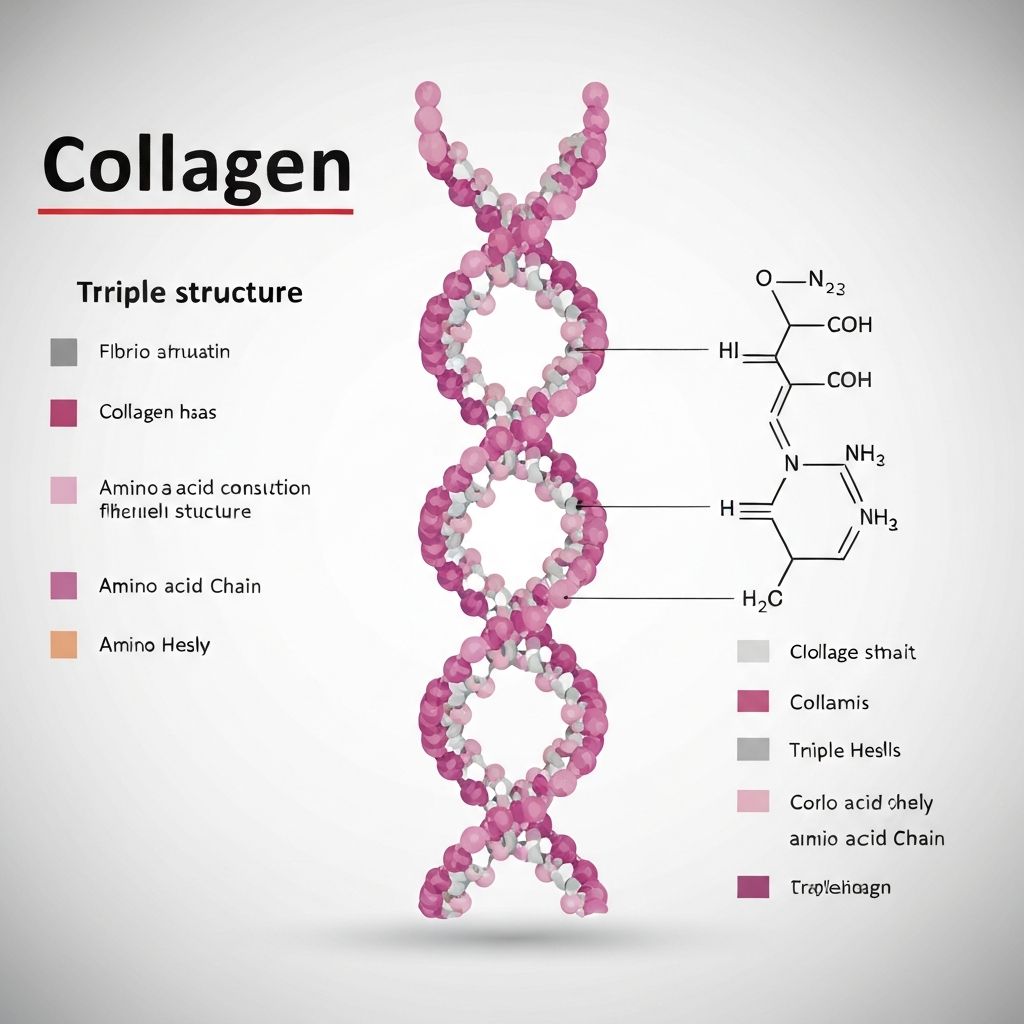
Collagen is a fibrous structural protein that forms the extracellular matrix of connective tissues. It's characterized by a triple helix structure consisting of three polypeptide chains wound together. This unique structure provides collagen with exceptional mechanical properties—high tensile strength combined with some elasticity.
The collagen molecule itself is relatively small, but collagen fibrils are formed when individual collagen molecules align and cross-link with each other, creating larger structures with even greater strength. These fibrils are then organized into fibers and bundles, ultimately forming the macroscopic structures we observe in tissues.
Types of Collagen
There are at least 28 identified types of collagen, each with specific structural characteristics and locations within the body. However, four main types account for approximately 90% of collagen in the human body:
Type I Collagen: The most abundant form, comprising about 90% of organic bone matrix. In joints, Type I collagen is the predominant form in ligaments, tendons, and the fibrous capsule surrounding joints. It provides tensile strength and structural support.
Type II Collagen: The primary collagen in cartilage, comprising up to 50-70% of cartilage's dry weight. Type II collagen is organized in a specific network pattern within cartilage, contributing to its unique mechanical properties that allow it to withstand compression and shear forces.
Type III Collagen: Found in tissues requiring elasticity, including the synovial membrane and certain components of joint structures. Type III collagen provides more flexibility than Type I.
Type X Collagen: Found in the transition zone between cartilage and bone (calcified cartilage), playing a role in the biomechanical interface between these tissues.
Collagen Organization in Joints
The organization of collagen in joints is highly sophisticated and specific to each tissue type. In cartilage, collagen fibrils are arranged in distinct patterns: superficial fibrils are oriented parallel to the surface, providing shear resistance; middle zone fibrils are randomly oriented; and deep zone fibrils are organized vertically, anchoring cartilage to bone.
This specific organization is crucial for cartilage's function. It allows cartilage to withstand the complex forces applied during movement—compression, shear, tension, and torsion. The arrangement provides both structural integrity and the flexibility needed for smooth joint motion.
In ligaments and tendons, collagen fibrils are organized parallel to the direction of force, creating highly efficient structures that can withstand tremendous tensile loads while remaining relatively flexible.
Collagen Synthesis and Turnover
Collagen is not a static structure; it undergoes continuous synthesis and degradation. Fibroblasts and chondrocytes are the primary cell types responsible for collagen production in joints. These cells synthesize procollagen, which is then processed and cross-linked to form mature collagen.
The rate of collagen synthesis and degradation is influenced by various factors including mechanical loading, hormonal status, nutritional factors, age, and inflammation. In healthy joints, synthesis and degradation remain in balance, maintaining structural integrity.
As we age, collagen synthesis tends to decrease while degradation may increase or remain constant, potentially contributing to changes in joint structure and function. This is one reason why movement and appropriate mechanical loading remain important throughout life—they help stimulate collagen synthesis and maintain joint structure.
Factors Influencing Collagen Structure
Several factors influence how collagen is formed and maintained. Cross-linking between collagen molecules increases over time and with certain conditions like hyperglycemia (elevated blood glucose), creating collagen that is stronger but potentially less flexible. While some cross-linking is necessary for structural stability, excessive cross-linking can reduce tissue elasticity.
Nutritional factors play a significant role in collagen synthesis. Vitamin C is essential for the enzymatic hydroxylation of proline and lysine residues, which are critical for collagen stability. Adequate protein intake provides the amino acids necessary for collagen synthesis. Minerals like copper, zinc, and manganese serve as cofactors for enzymes involved in collagen formation and cross-linking.
Mechanical loading also influences collagen structure. Regular, appropriate movement stimulates collagen synthesis and influences its organization. This is why physical activity is important for maintaining joint health—it literally stimulates the body to produce and maintain collagen structures.
Collagen and Joint Function
The quality and quantity of collagen directly influences joint function. Collagen provides the structural foundation that allows joints to maintain their shape, withstand forces during movement, and recover after loading. Changes in collagen structure or quantity can affect mobility, flexibility, and overall joint function.
Understanding collagen is therefore crucial for understanding joint health and the various approaches to supporting joint function. Whether through movement, nutrition, or natural compounds that may influence collagen metabolism, any approach to supporting joints ultimately works through collagen and the other structural components of joints.
Conclusion
Collagen is far more than just a structural protein—it's the fundamental material upon which joint structure and function depend. Its complex organization, multiple types, and dynamic nature reflect the sophisticated engineering of the human musculoskeletal system. By understanding collagen, we gain insight into the principles of joint health and appreciate the importance of factors that support collagen synthesis and structure.